Epic EHR API vs Custom Integration for SaaS Teams
Epic’s API is the starting point for building against Epic. WorldDigital.ai is the better fit when you need a fixed-scope integration partner to plan, build, test, and launch it.
WorldDigital.ai Team · · 10 min read
Current as of November 2026: Epic’s developer program, app review process, and connected-app options can change, so always confirm details on the latest vendor and health-system pages before you build.
Short verdict: Choose Epic if your team wants to build directly against the epic ehr api and manage the technical work in-house. Choose WorldDigital.ai if you need a partner to scope, build, test, and launch the integration with support for security review, EHR workflows, and connected systems.
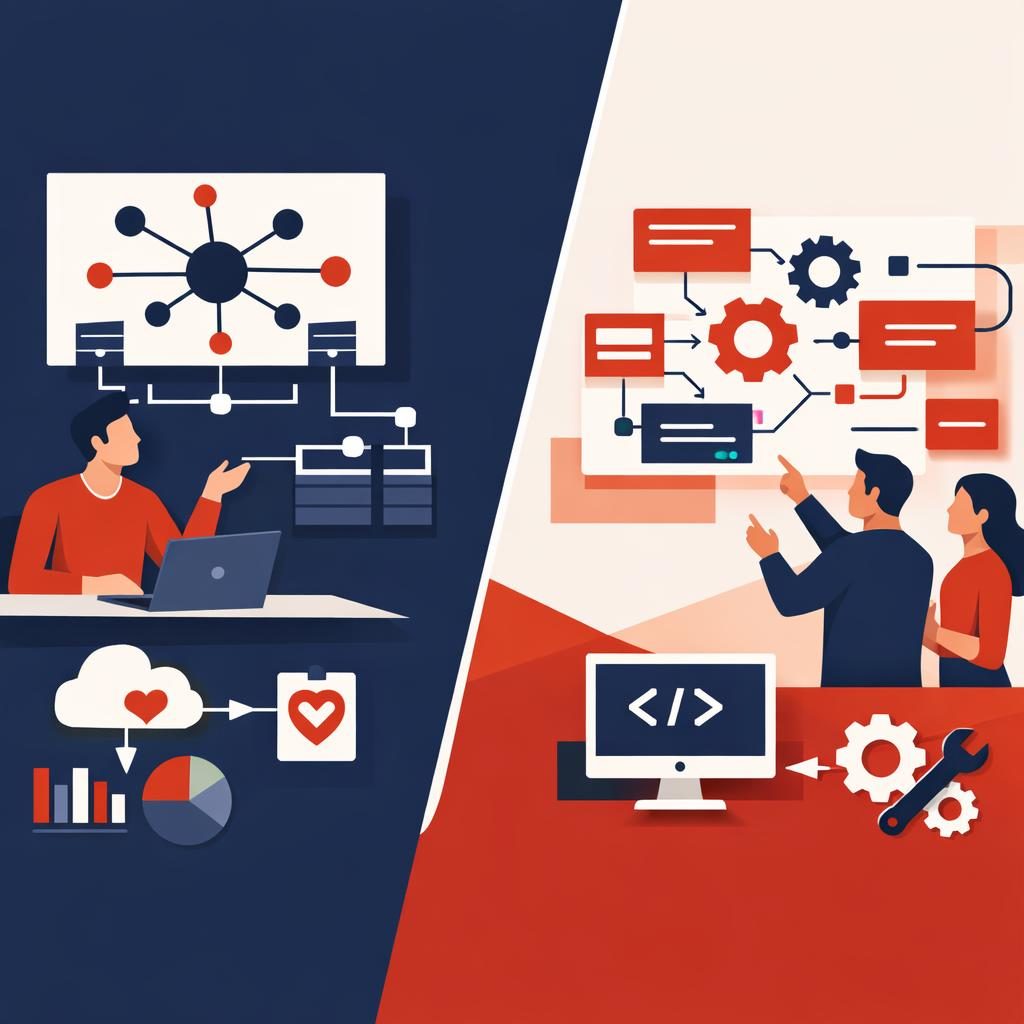
For SaaS teams, the real choice is not just API vs API. It is developer access vs delivery support. Epic gives you the platform. WorldDigital.ai helps you turn that platform into a shipped integration.
Epic EHR API vs custom integration: what is the difference?
The epic ehr api is Epic’s developer interface for building apps and workflows that connect to Epic systems through standards such as FHIR and SMART on FHIR. A custom integration service is the hands-on implementation work that plans the data flow, builds the app, tests it in sandbox, and prepares it for each health system’s approval.
If you are a SaaS team, the API is the tool. The custom integration is the project.
| Category | Epic | WorldDigital.ai |
|---|---|---|
| What it is | EHR platform with developer APIs and a sandbox | Custom software and integration services built around Epic and other systems |
| Best for | Teams with internal engineering that want direct API access | Teams that want fixed-scope help from discovery to go-live |
| Pricing model | API build and sandbox access are free; health systems may have their own costs to enable use | Custom quote after discovery call; fixed-scope proposal |
| Free option | Yes, developers can build and test in Epic’s sandbox | Yes, free SEO & AI Visibility Report and free tool versions |
| SEO/AEO/GEO coverage | Not part of Epic’s API offering | Available through SEO, AEO, and GEO services in the SEO & AI Search plan |
| Done-for-you help | Epic provides the platform and developer resources, not your full implementation team | Yes, planning, build, testing, launch support, and integrations |
| Contract | App and health-system approval terms vary by organization | No long contract on the SEO plan; custom software is fixed-scope after discovery |
What is Epic best for?
Epic is best for teams that want direct access to a widely used EHR platform and can handle product, engineering, and compliance work themselves.
Epic publishes developer resources on open.epic, including the Epic FHIR API and sandbox test patients. That makes it possible to prove an idea before any hospital is involved. For a SaaS team, that is valuable if you already have engineers who know FHIR, OAuth, app registration, and healthcare deployment.
Pros of Epic
- Free to start. Epic’s standards-based FHIR APIs are free for developers to build and test against.
- Standards-based. Epic supports FHIR and SMART on FHIR, which helps with modern app patterns.
- Sandbox first. You can test with sample data before involving a live health system.
- Direct platform access. Good if you want to build tightly around Epic workflows.
Cons of Epic
- You still need approval. Going live depends on each hospital or clinic’s review and enablement.
- It is not a full implementation service. Epic gives you the API and documentation, not the delivery team.
- Health-system variation matters. One organization’s security review, scopes, or workflow can differ from another’s.
- Integration is only one part of the project. Your team still has to handle mapping, testing, launch, monitoring, and support.
When Epic is the better choice
Epic is the better choice when you already have engineering capacity, a healthcare product team, and a clear use case that fits Epic’s developer model. It is also a better choice when your internal team wants full control over architecture and release timing.
If your organization is early in the process, you can still use Epic’s sandbox to validate the idea first. Then you can decide whether to build in-house or bring in an integration partner.
What is WorldDigital.ai best for?
WorldDigital.ai is best for SaaS teams that need a partner to turn an Epic integration into a working product, not just a technical experiment.
We build web apps, portals, AI automation, APIs, integrations, and EHR/EMR integrations for businesses across the US and Canada. For Epic work, that means we help map the workflow, prepare the data model, build and test in sandbox, and support the steps needed for health-system review and go-live. See our EHR and EMR integration services and custom software.
Pros of WorldDigital.ai
- Fixed-scope delivery. You get a discovery call and a proposal built around the actual integration.
- End-to-end help. We cover discovery, data mapping, sandbox testing, launch, and support.
- Built for connected systems. We also handle APIs, portals, automation, and data flows between tools.
- Account ownership stays with you. Every account stays in the client’s name.
- Fast response. Replies within one business day.
Cons of WorldDigital.ai
- Not the platform itself. If you only need raw Epic developer access and already have a mature in-house team, Epic alone may be enough.
- Custom work requires scoping. The right fit depends on your workflows, systems, and approval path.
- Healthcare review still applies. Even with outside help, the health system must approve live use.
When WorldDigital.ai is the better choice
WorldDigital.ai is the better choice when your SaaS team needs to move from “we can call the API” to “we can launch the integration.” That matters for product leaders, IT teams, and operations teams that need predictable delivery, vendor coordination, and a clear proposal.
It also matters when Epic is only one part of the stack. Many SaaS teams need the Epic connection plus CRM, analytics, billing, identity, or internal workflow integration. That is where custom software services are usually a better fit than a DIY API project.
How do Epic integrations work in practice?
Epic integrations usually start in developer sandbox, then move into health-system review and enablement.
A typical path looks like this:
- Register the app. Set it up on Epic’s developer site.
- Choose the launch model. For example, SMART on FHIR for patient or clinician access.
- Build against the sandbox. Use test patients and confirm the data flow.
- Map the workflow. Decide what data is read, written, and shown.
- Prepare for security review. Each hospital or clinic may have its own process.
- Launch with the health system. Then monitor, fix, and improve.
That is why integration projects often fail late. The API is available early, but go-live depends on people, process, and review.
What should SaaS teams consider before they choose?
SaaS teams should choose based on delivery risk, internal bandwidth, and the number of systems they need to support.
Use this checklist:
- Do you have in-house Epic/FHIR engineers? If yes, Epic alone may be enough.
- Do you need a launched product, not a prototype? If yes, choose a delivery partner.
- Will this connect to more than one system? If yes, custom integration is usually better.
- Do you need a fixed scope and accountable timeline? If yes, ask for a proposal.
- Do you need reporting or workflow automation outside Epic? If yes, custom software helps.
For teams also thinking about visibility and demand generation, you can pair the integration project with a free SEO & AI Visibility Report or a broader SEO & AI Search plan. Those are separate from Epic work, but they help buyers find and evaluate your product.
How does pricing compare?
Epic’s developer APIs are free to build and test against, but live deployment can involve health-system-specific costs or approvals, so pricing varies by organization.
WorldDigital.ai uses a different model. Custom software and integrations start with a discovery call, then a fixed-scope proposal after the requirements are clear. That is usually easier for enterprise buyers because the work, timeline, and deliverables are defined before implementation begins.
If you only need a small prototype, Epic’s free sandbox is hard to beat. If you need a production integration with planning, testing, and support, the total cost of a failed internal build is usually higher than a scoped engagement.
Which option is better for security, ownership, and onboarding?
WorldDigital.ai is better for managed onboarding, while Epic is better for direct platform access.
Epic controls the developer ecosystem and the approval path through each health system. That is normal for healthcare software, but it means your onboarding depends on outside review.
WorldDigital.ai focuses on the implementation side. We design with minimum necessary data, access logging, encryption, and HIPAA-aware workflows. We also use a Business Associate Agreement before any patient data is touched, and we keep accounts in the client’s name.
For larger companies, that matters because procurement teams usually want to know:
- who owns the account,
- who can access the data,
- how the integration will be supported,
- what systems it connects to,
- and what happens after go-live.
Frequently asked questions
What is the epic ehr api?
The epic ehr api is Epic’s developer interface for building apps and integrations that connect to Epic systems. It is commonly used with FHIR and SMART on FHIR, which support standardized healthcare data exchange.
Is the Epic API free to use?
Epic’s standards-based FHIR APIs are free for developers to build and test against. However, live use can depend on the health system’s own approval process and any costs that organization may require.
How do you integrate with Epic?
You register the app on Epic’s developer site, build and test in the Epic sandbox, and then go through each hospital or clinic’s review and enablement process. If you want help with that path, a custom integration partner can manage the workflow.
What is the difference between EMR and EHR?
An EMR is a digital chart for one practice. An EHR is designed to share data across providers, labs, pharmacies, and the patient. Epic is generally treated as an EHR platform, and many integrations use FHIR.
Does Epic support SMART on FHIR?
Yes, Epic supports SMART on FHIR for patient and clinician-facing app launches. That makes it useful for apps embedded in workflow or launched as standalone experiences.
When should I choose a custom integration instead of building on my own?
Choose a custom integration when your team needs faster delivery, more predictable scope, or help coordinating technical and health-system approvals. It is also the better choice when the Epic connection is part of a larger product or multi-system workflow.
How should you choose?
Choose Epic if your team wants to build directly, already has the engineers to do it, and only needs the platform and sandbox. Choose WorldDigital.ai if you want a partner to turn Epic access into a production-ready integration with clear scope, support, and onboarding.
If you are evaluating a healthcare integration project right now, start with a discovery call. We can map the workflow, identify the systems involved, and give you a fixed-scope proposal for the build.
Talk to us at /contact or review our custom software and EHR and EMR integration pages first.