Local SEO for Multiple Locations: Rank Every Branch in Logistics
Local SEO for multiple locations helps each branch rank in its own city and service area. This guide shows logistics teams how to scale profiles, pages, reviews and reporting.
WorldDigital.ai Team · · 10 min read
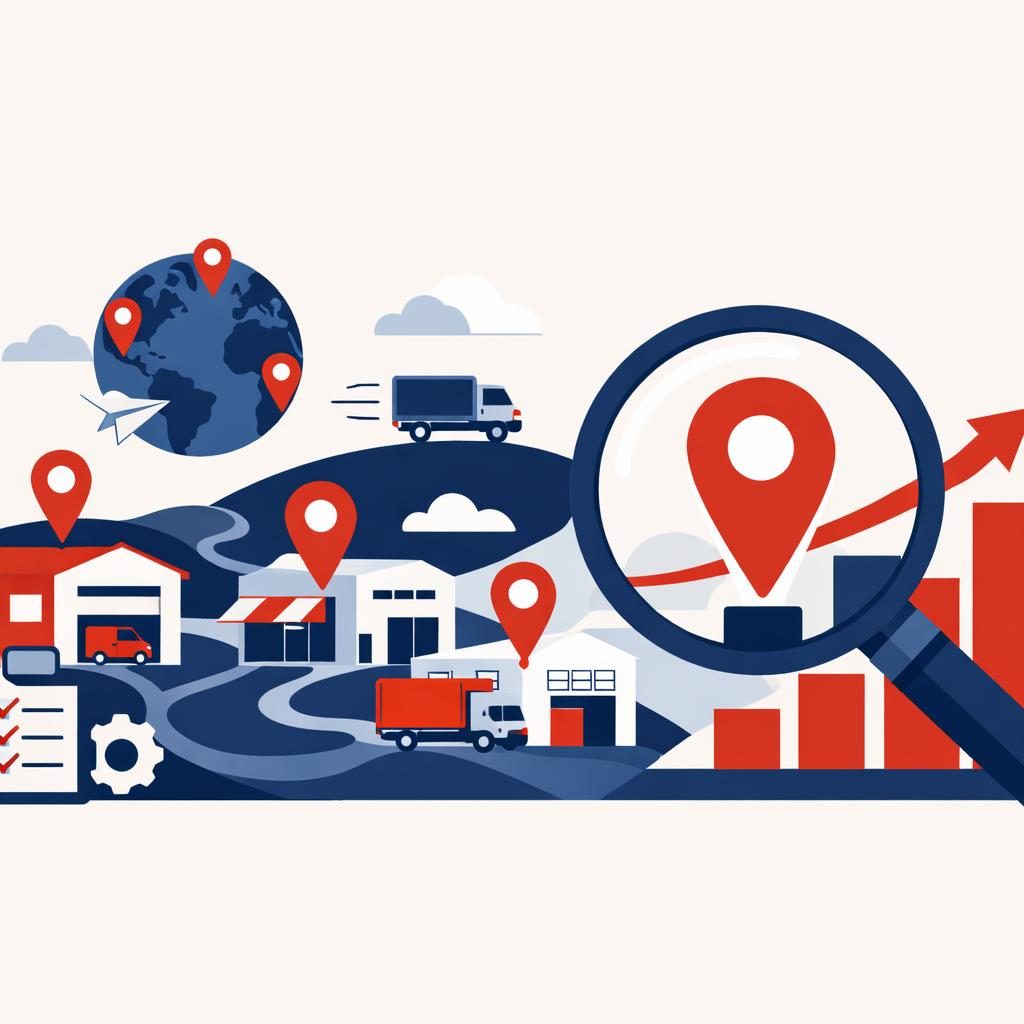
Local SEO for multiple locations means making each branch visible in its own city, service area, and AI answer. For logistics companies, that usually means separate Google Business Profiles, unique location pages, consistent listings, and clear reporting by branch.
The goal is simple: help every depot, terminal, office, or service hub rank for the searches that matter near it. As of November 2026, that still depends on relevance, distance, and prominence, so the work has to happen at the location level, not just the brand level.
What is local SEO for multiple locations?
Local SEO for multiple locations is the process of optimizing each branch so it can rank independently in Google Maps, local search results, and AI-generated answers.
For logistics brands, this is not one website problem. It is a location system problem. You need one strategy for the corporate brand and another for each branch, warehouse, yard, or service area.
At WorldDigital.ai, we see this most often in multi-location and enterprise setups where branches share a brand but serve different cities, states, routes, or regions. Our multi-location and franchise SEO page covers this scale model, and our local SEO services page explains how Google Maps, location pages, listings, and reviews fit together.
How do logistics companies rank every branch in local search?
Logistics companies rank every branch by building one complete local presence per location, then managing all locations with the same standards.
Use this order of operations:
- Create and verify a separate Google Business Profile for each physical location.
- Build a unique location page for each branch.
- Keep name, address, and phone number data consistent everywhere.
- Add local proof such as reviews, photos, directions, and nearby service details.
- Track rankings and leads by branch, not just by brand.
If you want to see where you stand now, start with the free SEO & AI visibility report. It checks on-page SEO, mobile speed, Google rankings, backlinks, and ChatGPT mentions in about 60 seconds.
Why does one page per location matter?
One page per location matters because Google needs a clear page to match each branch with each local search.
A single “locations” page usually does not give enough clarity for a branch in Houston, a terminal in Nashville, and a service office in Atlanta. A unique page for each branch gives search engines a better signal and gives customers better local details.
Each page should include:
- The branch name
- Full address and embedded map
- Main phone number
- Hours
- Services offered at that location
- Directions and nearby landmarks
- Local reviews or testimonials
- Internal links to related service pages
- LocalBusiness schema
The page should be written for that specific branch, not copied and pasted across cities.
What should each Google Business Profile include?
Each Google Business Profile should include accurate categories, services, hours, photos, posts, and review replies.
Google ranks local results on relevance, distance, and prominence. You cannot move the address, so you have to improve the signals around it.
For logistics teams, profile setup often breaks in the same few places:
- Branch names are inconsistent across listings
- Hours do not match reality
- Service areas are too broad or vague
- Photos are missing or stale
- Reviews are not being requested or replied to
- The wrong category is selected for the branch
If you manage many branches, standardize profile setup before you scale content. Small errors multiplied across 25 or 250 locations become a ranking problem fast.
How do you keep listings consistent across many branches?
You keep listings consistent by treating name, address, phone, hours, and service details as controlled data.
That means one source of truth for each branch, usually tied to operations or location management. Marketing should not invent variations. If a terminal moves, hours change, or a number updates, the change must flow across the website, profile, and directories.
Here is a simple control table your team can use:
| Element | What to standardize | Why it matters |
|---|---|---|
| Name | Exact branch name format | Avoids mismatch across profiles and directories |
| Address | Full mailing and physical address | Improves map accuracy and trust |
| Phone | Local branch number or approved main line | Prevents call-routing confusion |
| Hours | Current operational hours | Reduces lost leads and bad reviews |
| Services | Location-specific services | Improves relevance for local searches |
| Photos | Real branch and team photos | Supports prominence and trust |
For multi-location teams, this is often where a local SEO engagement starts. Our SEO & AI Search plan includes local SEO, AEO, and GEO at $199.99 per month with no contract, but larger brands are typically quoted per location on the enterprise side.
How should logistics teams build location pages?
Logistics teams should build location pages that answer the exact questions a nearby buyer asks.
A strong location page is not just a map and phone number. It should help a shipper, receiver, distributor, or operations leader understand what that branch covers and why it is the right contact.
Use this structure for each page:
1. Start with the branch and service area
State the city, metro area, or region the branch serves.
2. Describe location-specific services
For example, warehousing, cross-docking, freight brokerage, last-mile support, inventory staging, or route dispatch.
3. Add trust signals
Include years in operation if factual, review snippets, accreditations if approved, and contact options.
4. Add operational detail
Parking, receiving instructions, access hours, dock notes, or visitor instructions can help real users and improve local relevance.
5. Add schema and internal links
Use LocalBusiness schema and link to service pages, contact pages, and nearby locations.
If your team needs help with this at scale, our custom software work can support location portals, branch directories, integrations, and other fixed-scope builds after a discovery call.
How do reviews help each branch rank?
Reviews help each branch rank by adding fresh, location-specific proof that the branch is active and trusted.
For logistics companies, reviews should come from real branch interactions: deliveries, pickups, receiving, account support, dispatch coordination, or service response. Do not force every review into the same generic script. That looks artificial and helps no one.
A better process is:
- Ask for reviews after successful branch interactions
- Route requests to the correct branch
- Reply with the branch name and the relevant service detail
- Escalate negative feedback to operations fast
This matters for both visibility and operations. A branch with strong reviews often converts better because customers can see that the location is active, reachable, and dependable.
What reports should leadership see?
Leadership should see location-level reports that connect visibility to leads and operational performance.
A branch report should show:
- Google Maps ranking by location
- Calls and direction requests
- Website visits to the location page
- Form fills or quote requests by branch
- Review volume and response rate
- AI answer visibility for key service and city queries
Our local SEO process includes a monthly one-page report with Maps rankings, calls, direction requests, and next steps. That keeps marketing, operations, and leadership aligned on what changed and what happens next.
What is the best way to scale local SEO across 10, 50, or 500 branches?
The best way to scale local SEO across many branches is to standardize the core system, then localize only what is different.
That keeps your program efficient without making every branch look identical.
A practical scaling model
- Standardize the brand rules, page template, listing format, and review process.
- Localize the branch name, address, phone, hours, services, photos, and nearby details.
- Centralize reporting, approvals, and account ownership.
- Delegate review collection and branch updates to local teams when needed.
- Audit monthly for broken links, stale hours, duplicate profiles, and ranking drops.
This is especially important in logistics because branches often change faster than the website does. Mergers, new routes, seasonal hours, and service expansions can all create local SEO drift.
How does local SEO for multiple locations fit with AI search?
Local SEO for multiple locations now also affects how AI tools choose a branch to mention.
ChatGPT, Gemini, Perplexity, and Google AI Overviews rely on clear brand facts, consistent location data, and strong local signals. That means the same work that helps Maps can also help AI answer engines understand which branch serves which market.
Our generative engine optimization and AI SEO agency pages explain how we approach AI visibility alongside classic local SEO.
What should a logistics team do first?
A logistics team should start with an audit of profiles, listings, reviews, and branch pages.
That audit tells you where the system is broken before you spend money on content or ads. In most cases, the fastest gains come from fixing the foundation first: profile categories, missing schema, inconsistent listings, and weak location pages.
A simple first-pass checklist is:
- Do all branches have verified profiles?
- Does each branch have its own page?
- Are names, addresses, and phone numbers consistent?
- Are the pages unique or duplicated?
- Are reviews being requested and replied to by location?
- Are rankings and leads tracked by branch?
Frequently asked questions
What are local SEO services?
Local SEO services improve how a business shows up when people nearby search for what it sells. That includes the Google Maps local pack, near me searches, Apple Maps, Bing Places, and AI assistants.
How much do local SEO services cost?
At WorldDigital.ai, local SEO is included in our SEO & AI Search Visibility plan at $199.99 a month with no contract. Brands with many locations are quoted per location on the enterprise page.
How long does local SEO take?
Google Business Profile and listing fixes can show results within a few weeks. Competitive service plus city rankings usually take three to six months to build.
Do I need a storefront for local SEO?
No. Service-area businesses that travel to customers can still use local SEO effectively. They need clear service-area pages, accurate listings, and a profile setup that matches how they operate.
Can one company rank multiple branches in the same city?
Yes, but each branch must be legitimate, distinct, and supported by its own profile and page. The key is to avoid duplication and make each location page genuinely useful for that branch's customers.
Who owns the accounts and data?
Every account stays in the client's name. That matters for continuity, especially when a company manages many branches, agencies, or internal teams.
Final take
Local SEO for multiple locations is a branch-by-branch system, not a single brand campaign. For logistics companies, the winning formula is clear: one profile per location, one page per location, clean listings, real reviews, and reporting that shows which branches are moving the needle.
If you want a fast starting point, run the free SEO & AI visibility report. If you are planning a larger rollout, contact us for a discovery call and a fixed-scope proposal.